

Shotcrete Shoring: A Comprehensive Guide
Ensuring the safety and stability of a construction site is essential for successful project completion. One way to do this is by using an adequate shoring system. Shoring is a temporary method used to support excavations and keep the surrounding structures safe. Shotcrete shoring is one of the most effective methods used to support a weak structure.
Understanding Shotcrete Shoring in Vancouver
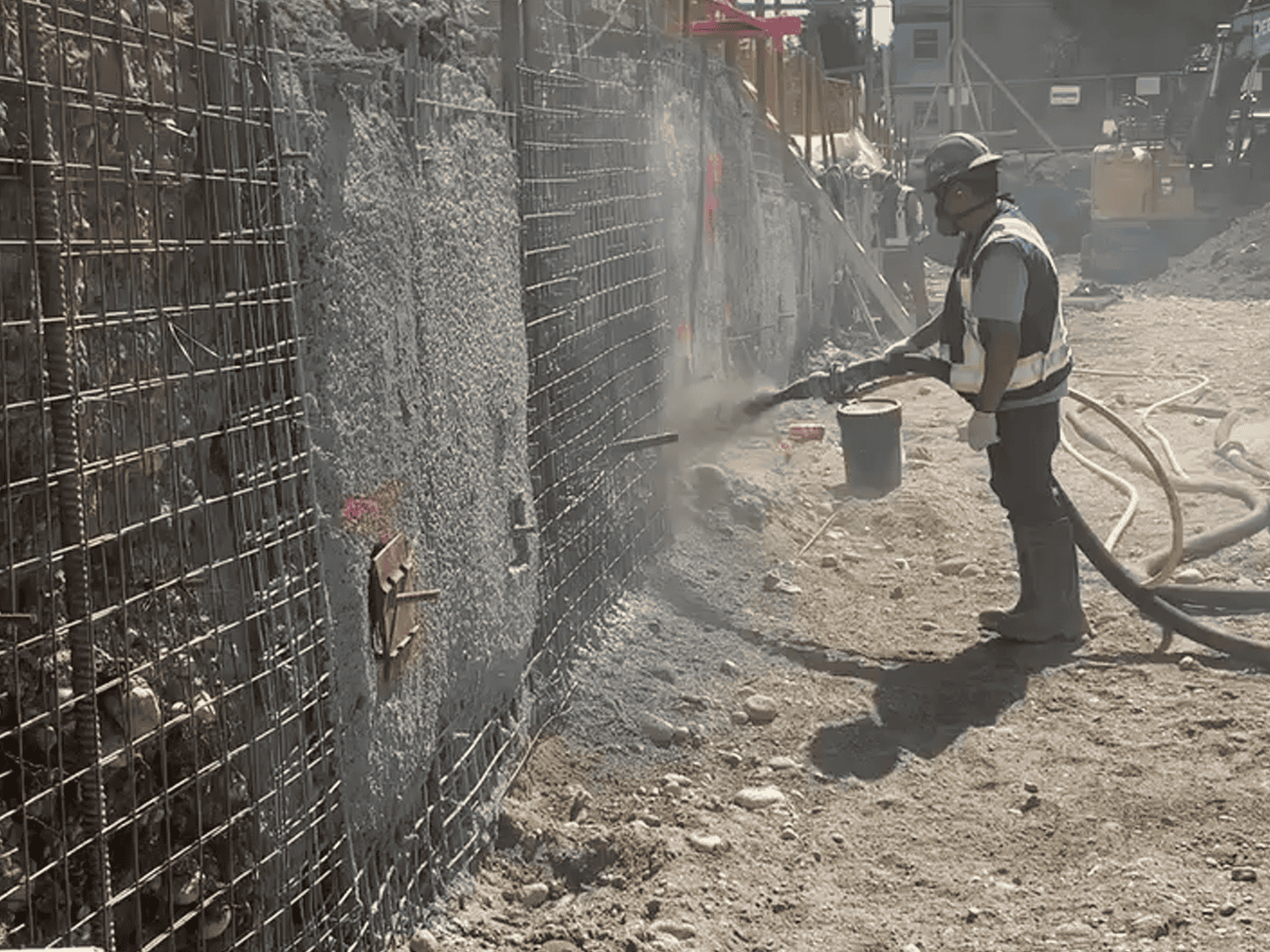
Vancouver’s soil conditions range from soft clays to hard glacial till. Shotcrete shoring offers a quick and cost-saving solution during the excavation process, no matter the soil type. This method uses a unique concrete mixture which is then sprayed at high velocity directly onto the dug-up soil. The high-velocity application of Shotcrete aids in compaction and cohesion, forming a robust foundation. It works well for both simple and complex underground projects.
The Basics of Shotcrete Shoring
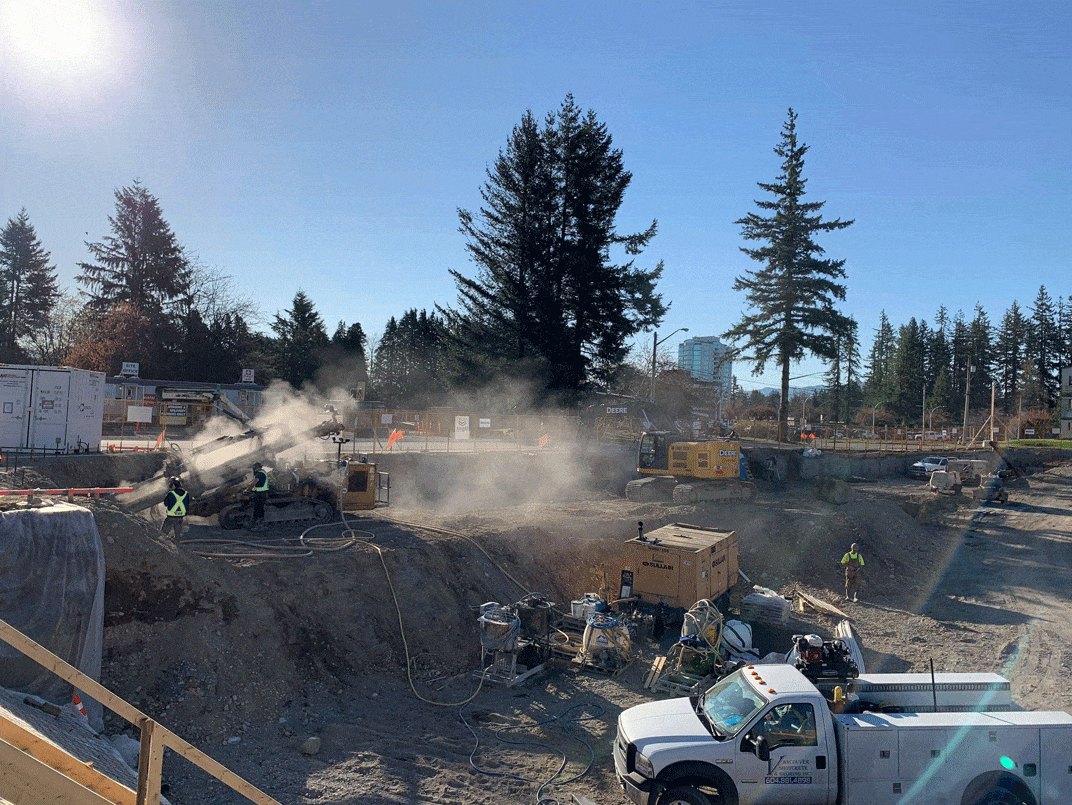
Shotcrete often surpasses traditional concrete shoring methods in various scenarios. It is effective for various construction tasks, including supporting excavations, stabilizing slopes, and lining tunnels. The process uses a high-pressure pump that pushes the Shotcrete mix through a hose and nozzle, to coat a surface.
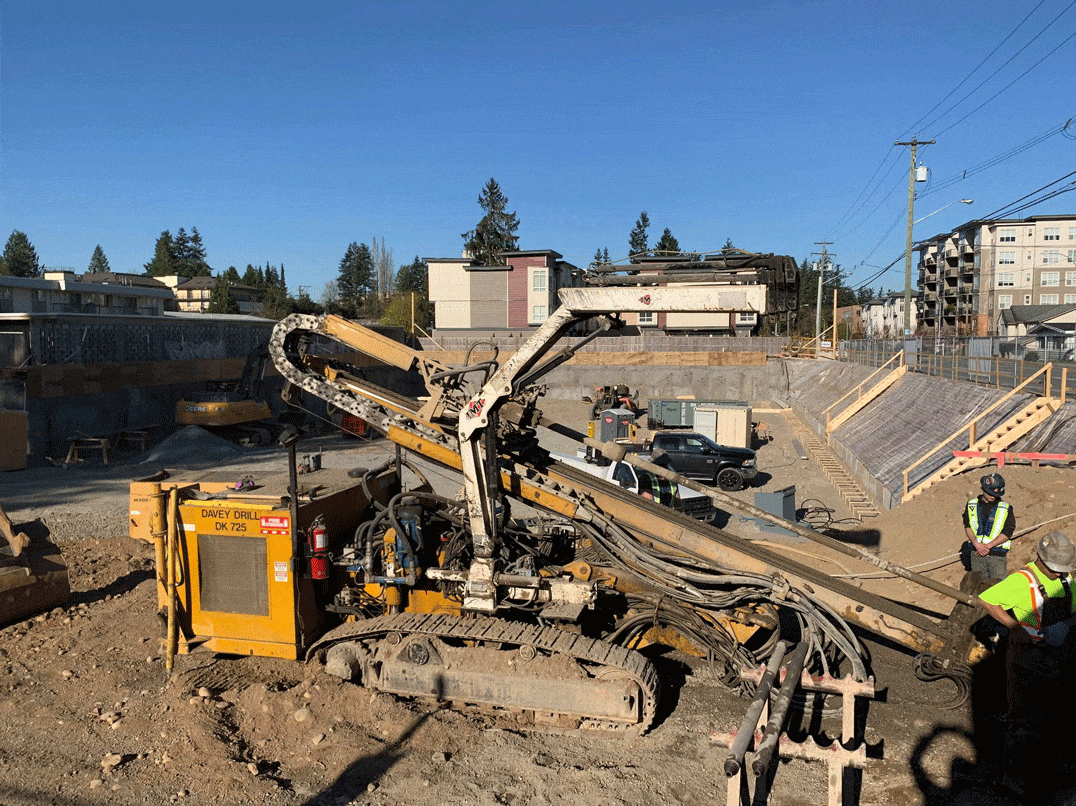
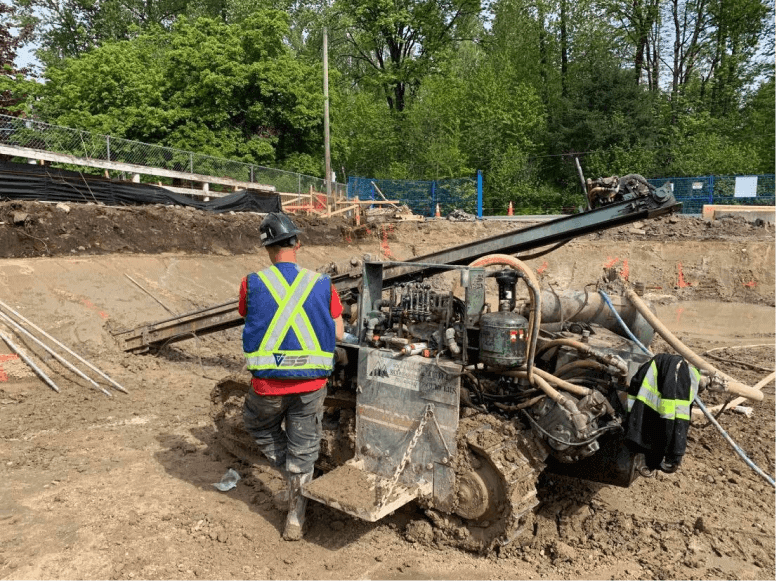
Shotcrete is only part of the design that supports the newly excavated surface. These systems can include Anchors, Soldier piles, Pipe Piles, reinforced steel and welded wire mesh. These retention systems provide additional support to the sprayed concrete area.
Why Shotcrete Shoring is Popular in British Columbia
British Columbia’s diverse landscape and soil characteristics make Shotcrete a popular choice. One reason Shotcrete is so popular is that it easily fits onto uneven shapes and difficult site conditions. Requiring no formwork, it’s ideal for projects with limited access or confined spaces. Plus, Shotcrete can be applied quickly, helping to reduce construction time and costs.
Easily adapted to meet specific project needs – whether you are working on a deep excavation, a steep slope, or a complicated underground structure, Shotcrete shoring offers a versatile solution that fulfills many types of construction requirements. This flexibility helps projects in British Columbia deal with geological and logistical issues while also keeping things stable.
Key Benefits of Using Shotcrete for Shoring Projects
The increasing popularity of Shotcrete shoring in Vancouver and British Columbia highlights its various benefits over traditional methods. Its straightforward application and high strength make it an excellent choice for construction projects.
Faster construction times, lower labour costs, and minimized disturbance to nearby areas are some of the benefits offered.

Time Efficiency and Quick Application
When you are working on deep excavation projects, staying on schedule is vital. Traditional methods, such as flying formwork, often require extensive setup and takedown time.
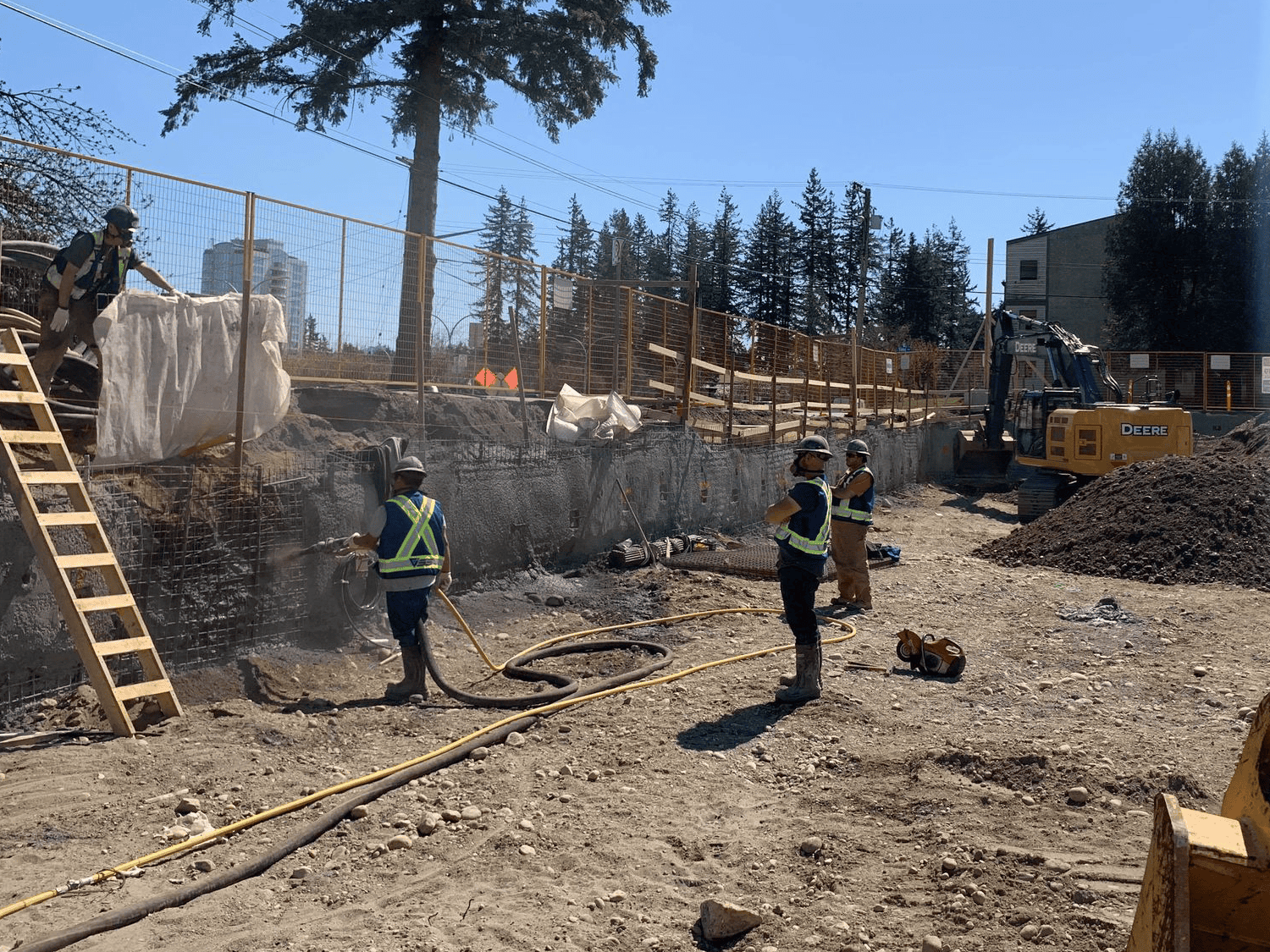
Shotcrete shoring saves time as concrete can be sprayed right onto the newly excavated area.
Additionally, Shotcrete sets quickly via high early-strength concrete. This offers immediate support, reducing curing time delays. The fast-setting time speeds up the process of digging support and lets other construction tasks move forward, keeping the schedule on track.
Versatility in Various Construction Scenarios
Whether you are dealing with a deep excavation for a tall building, stabilizing a weak slope, or building a tunnel, Shotcrete shoring can handle it all. It can be applied to unusual shapes and different soil conditions, making it a great choice. Here are some ways its flexibility is helpful:
- Stabilizing unstable structures: Provides support for unsafe structures and upgrades older buildings to meet seismic codes.
- Underpinning foundations: For foundations that need to be made stronger or bigger to handle new loads, Shotcrete shoring offers a practical answer.
- Creating retaining walls: Offers a quick method to build retaining walls, whether for temporary fixes or permanent solutions, in many construction projects.
Essential Considerations Before Implementing Shotcrete Shoring
While Shotcrete shoring has clear benefits, planning is very important. You need to consider factors specific to the site to ensure everything works well. Understanding these points will help improve the shoring design, reduce risks, and ensure settlement is minimized. The main purpose is to ensure safety and integrity.
Evaluating soil properties is vital before starting the project. This helps you understand how strong the ground is and how deep the structure should go. Similarly, knowing about groundwater is key. This way, you can handle problems like seepage and hydrostatic water pressure. By addressing these factors, you ensure a successful shoring project without complications.
Assessing Soil Conditions in Vancouver
The different types of soil found in Vancouver can make building projects tricky. Before starting any shoring project, performing a detailed geotechnical study helps check if the soil is suitable for the work. Knowing the soil’s features is key to making sure that the retaining walls stay stable.
In Vancouver, the common soil types include clay, sand, silt, and glacial till. Each type affects how the Shotcrete works.
For example, sandy soils can drain well, but they don’t have much strength. This means you might need a thicker layer of Shotcrete, anchoring, or steel members to ensure the retaining wall does not fail. Doing careful testing and analysis is important to find the best way to ensure a good result.
Legal and Environmental Compliance in British Columbia
Frequently Asked Questions
What Is the Difference Between Shotcrete and Traditional Concrete?
The main difference between Shotcrete and traditional concrete is how they are applied. Shotcrete is sprayed onto surfaces at a high speed. Conventional concrete is poured into forms and then vibrated to make it dense. This makes shotcrete the best option when construction conditions are tough.
How Does Weather Affect Shotcrete Shoring in Vancouver?
Weather can change how long it takes for Shotcrete shoring to cure. In cold weather, you might need to use special additives or take extra steps to protect the Shotcrete. Rain can also interrupt the application. It can affect the soil density and may mean you need to look at alternate dewatering options.
Not Just
Shoring