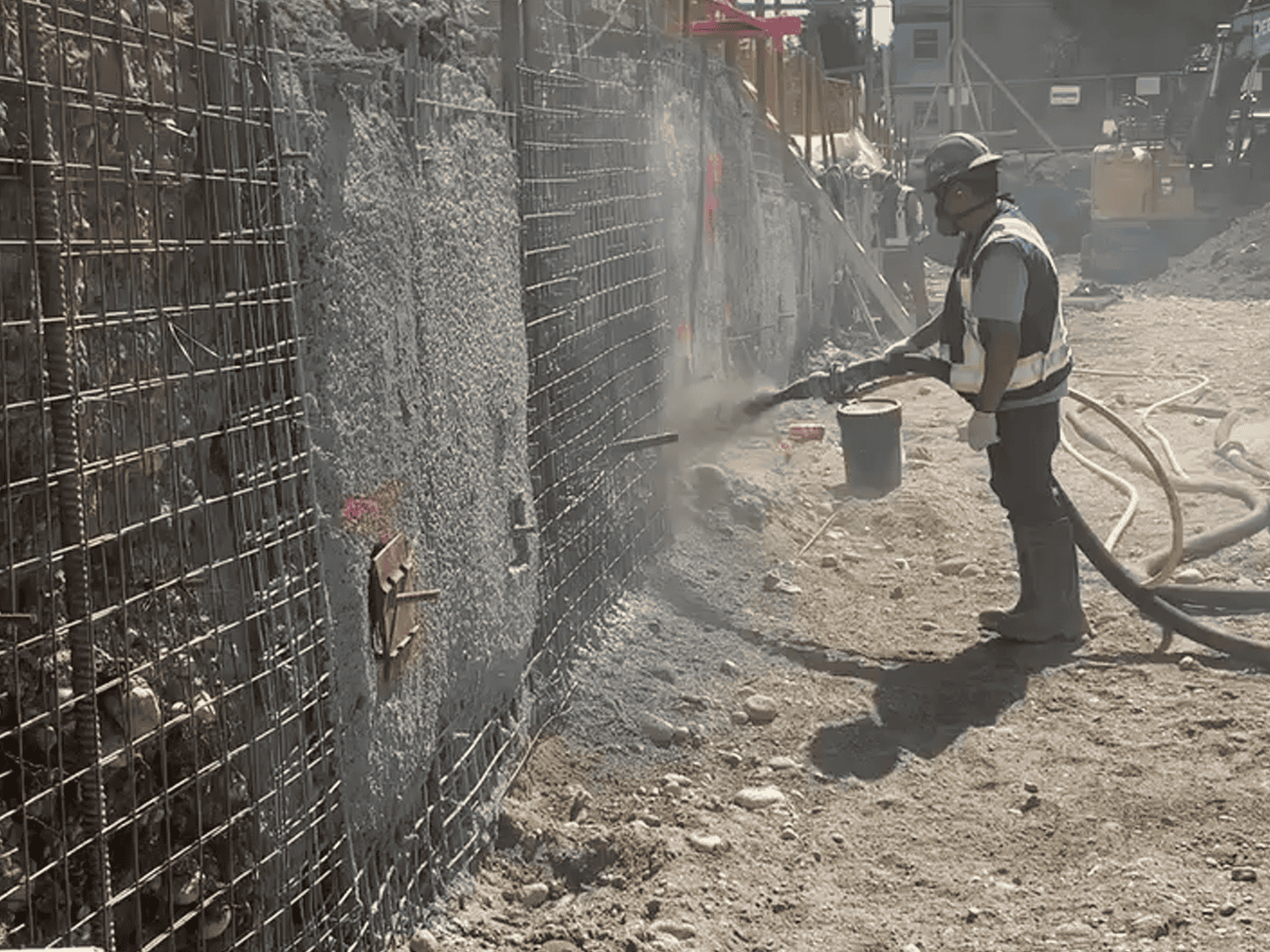
Pressure Grouting

Pressure Grouting Contractors Serving Vancouver and British Columbia

The measures taken to ensure the stability of a construction site depend on its underlying soil and rock formations. These conditions vary across Vancouver and British Columbia, so hidden voids, groundwater infiltration, and unstable soils are potential threats to the safety and performance of a construction project. In such cases, our specialized pressure grouting services provide fast, effective stabilization without major disruptions to the site.

What Is Pressure Grouting?

Pressure grouting, also called power grouting or injection grouting, is a ground improvement technique that injects grout materials into soil, rock, or voids under controlled pressure. The goal is to fill gaps, bind loose particles, and control water flow. Whether we use cement-based, chemical, or epoxy pressure grouting materials depends on your site’s specific conditions and what the goal is, like stabilizing loose soils, waterproofing against seepage, or filling cracks in deep foundations, for example. Common pressure grouting materials include cement-based, chemical, or epoxy grouting.
Some applications of pressure grouting include:
  • Foundation underpinning and repair
  • Soil stabilization and sinkhole remediation
  • Void filling under slabs and structures
  • Seepage control in below-grade construction
  • Low-pressure grouting for delicate granular soils
  • Epoxy pressure grouting for concrete crack sealing

Pressure Grouting Services We Offer

At VSS Shoring, we provide a full suite of power grouting methods. From low-pressure grouting in sensitive areas to high-pressure grouting for deeper soil densification, our team of experts conducts tests to determine which grouting method is ideal for you.
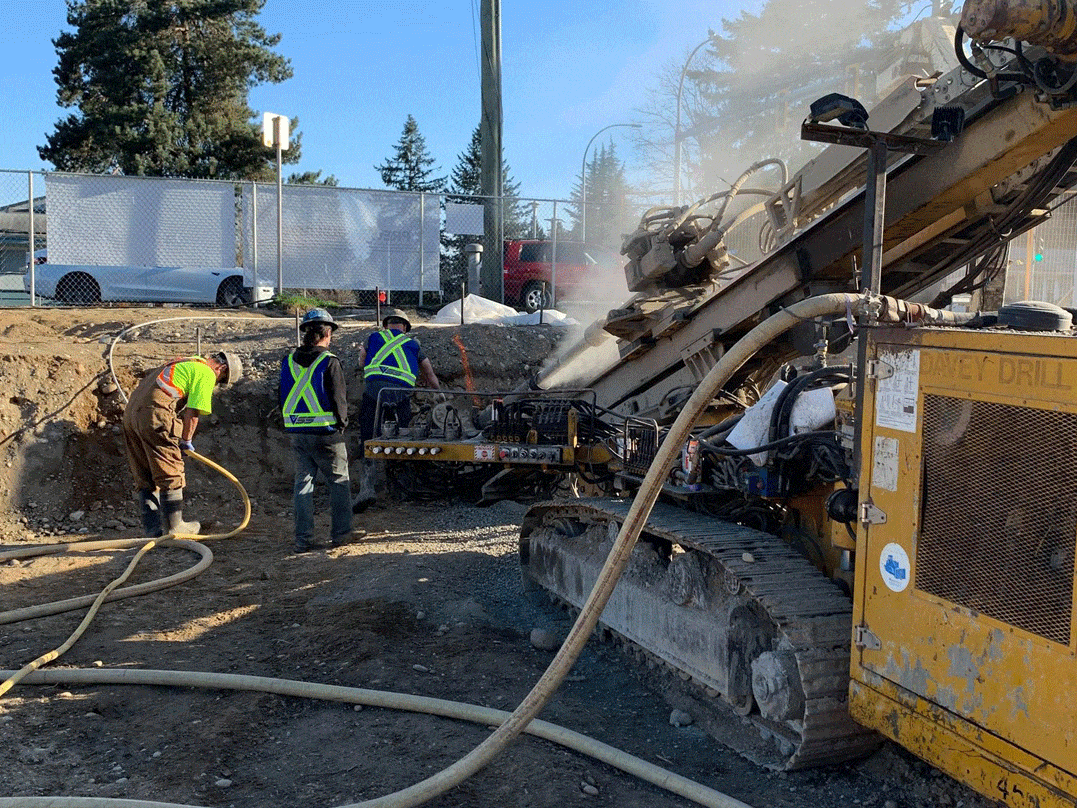
Compaction Grouting

As the name suggests, this high-pressure grouting technique is used to compact and stabilize loose or weak soils. It is carried out by injecting a stiff mortar-like grout that displaces soil as it expands, increasing its density and resulting in compaction. This method works well to reduce settlement under existing foundations without excavation.

Permeation Grouting

This low-pressure grouting method uses a fluid grout, like microfine cement, to saturate and bond granular soils. It is a method often used to control water seepage during excavations and into tunnels and soil stabilization, especially in sensitive zones near utilities or heritage structures.

Jet Grouting

A high-energy process that mixes grout with native soil in situ, forming cemented soil columns. Jet grouting is ideal for deep foundation support and excavation stabilization, especially in urban or restricted-access environments.

Void Filling

We use power grouting to fill abandoned tunnels, pipes, or cavities under slabs. This prevents structural settlement or collapse.

Epoxy Pressure Grouting

Epoxy resin is injected into fine cracks in concrete to restore structural integrity. This method is especially useful in infrastructure or basement repairs requiring precise, low-volume injection. Epoxy is also a popular grout choice for pressure grouting and waterproofing.

Why Pressure Grouting Matters

Whether you’re reinforcing a high-rise, supporting an industrial slab, or sealing a below-grade tunnel, pressure grouting offers plenty of benefits in complex environments.

Prevents Settlement

Densifies soil before construction or stabilizes existing foundations.

Controls Groundwater Intrusion

Creates waterproof barriers in basements, tunnels, and shafts.

Improves Soil Strength

Enhances bearing capacity in loose or variable soil conditions.

Minimally Disruptive

Avoids excavation and preserves existing structures during repair or reinforcement.

Versatile Application

From low-pressure to high-pressure grouting, we tailor the method to meet engineering and environmental requirements.

Cost Effective

It is a cost-effective method as it avoids demolition or excavations during repairs or retrofits.

The Pressure Grouting Process

Every grouting project at VSS Shoring begins with a site-specific assessment. Working closely with geotechnical engineers, we identify specific zones requiring treatment. The in-depth analysis is followed by three stages.

Preparation And Installation

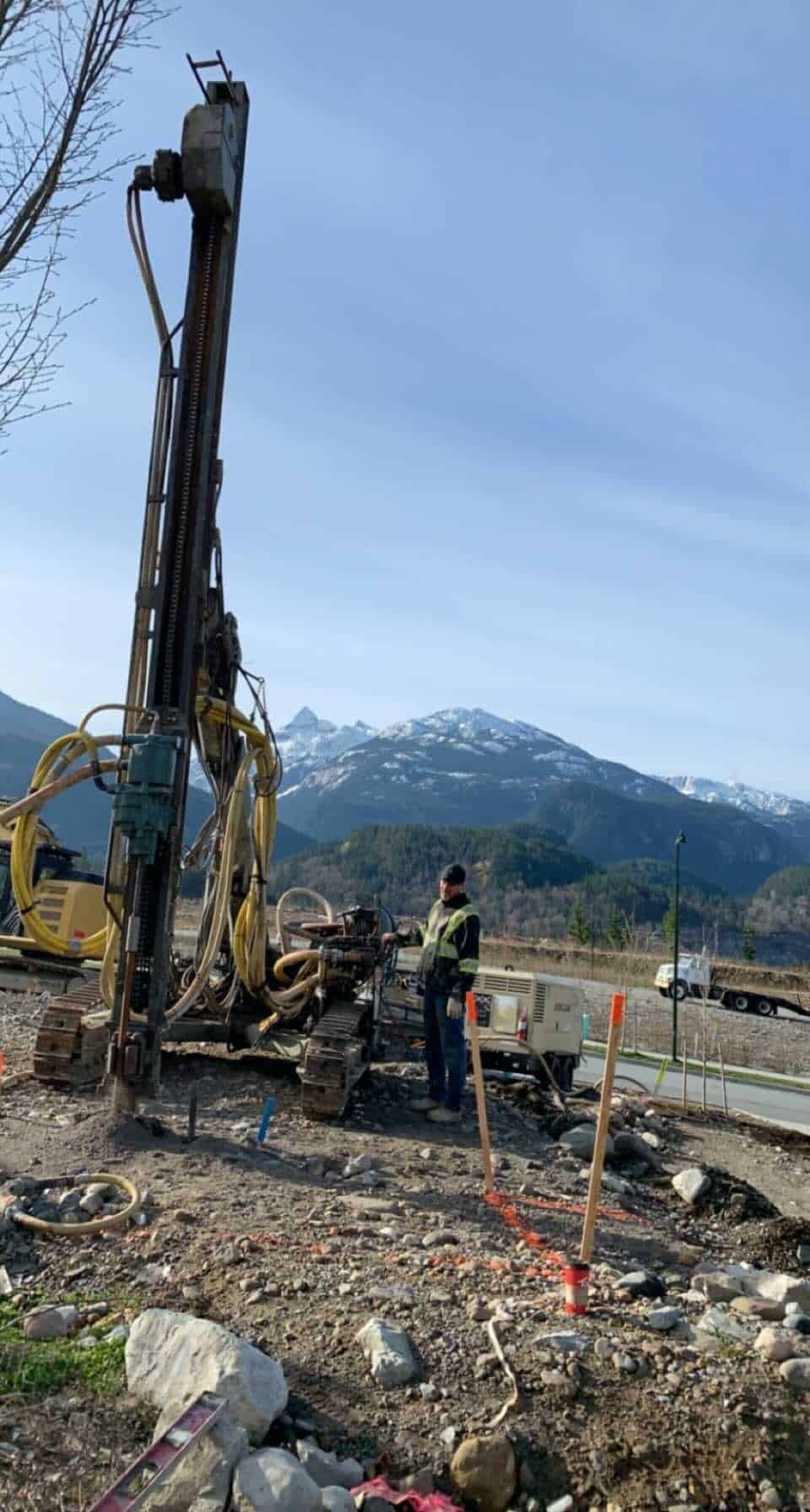
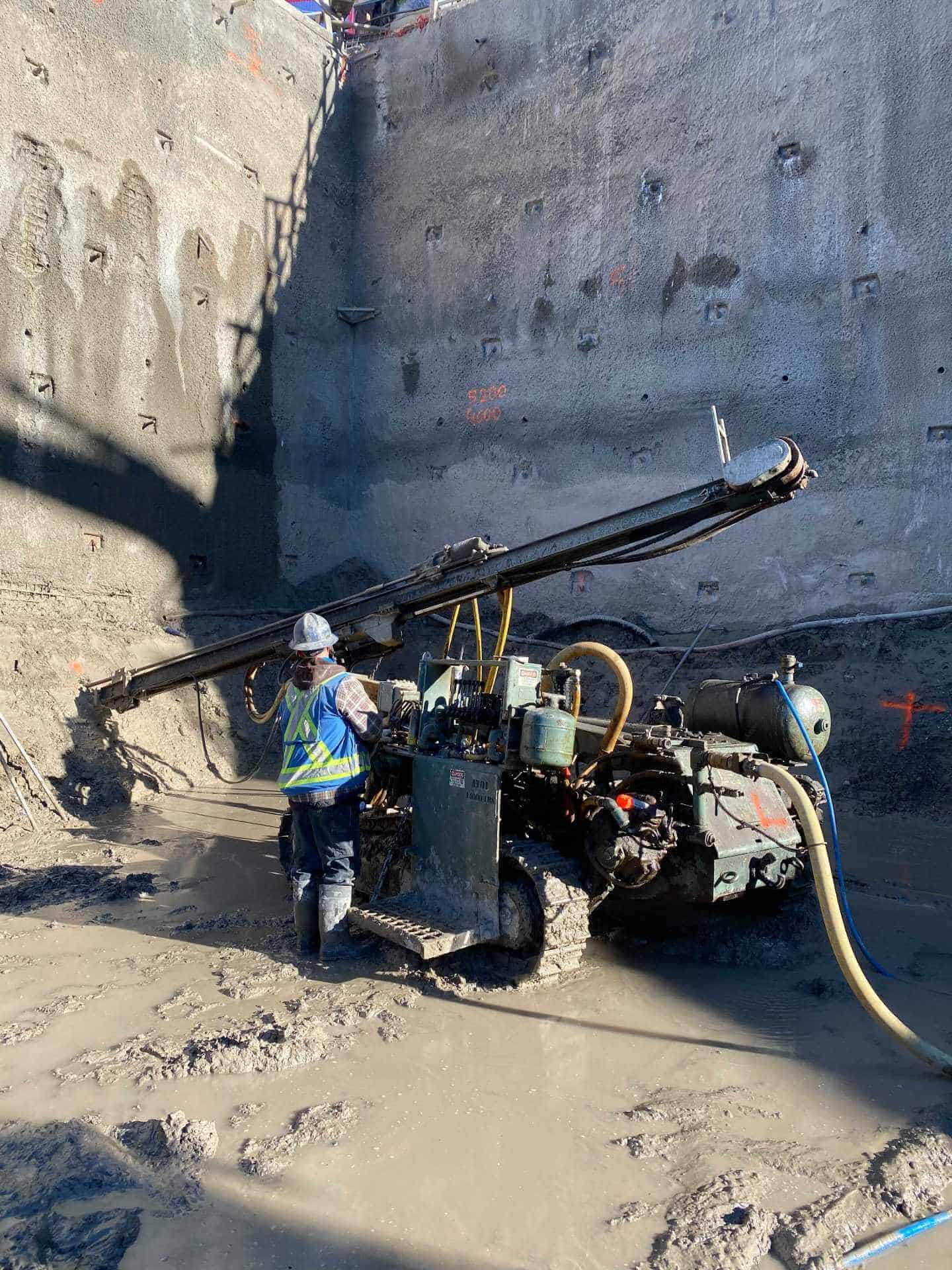
Based on the findings from the site assessment, we install injection points—either drilled or driven casings—to access the treatment zones. These points serve as access points for the grout to be delivered. We prepare the appropriate grout mix simultaneously. Depending on project requirements, this may be a cementitious, chemical, polyurethane, or epoxy pressure grouting compound, each mixed to a specific viscosity for optimal performance.

Grouting And Injection

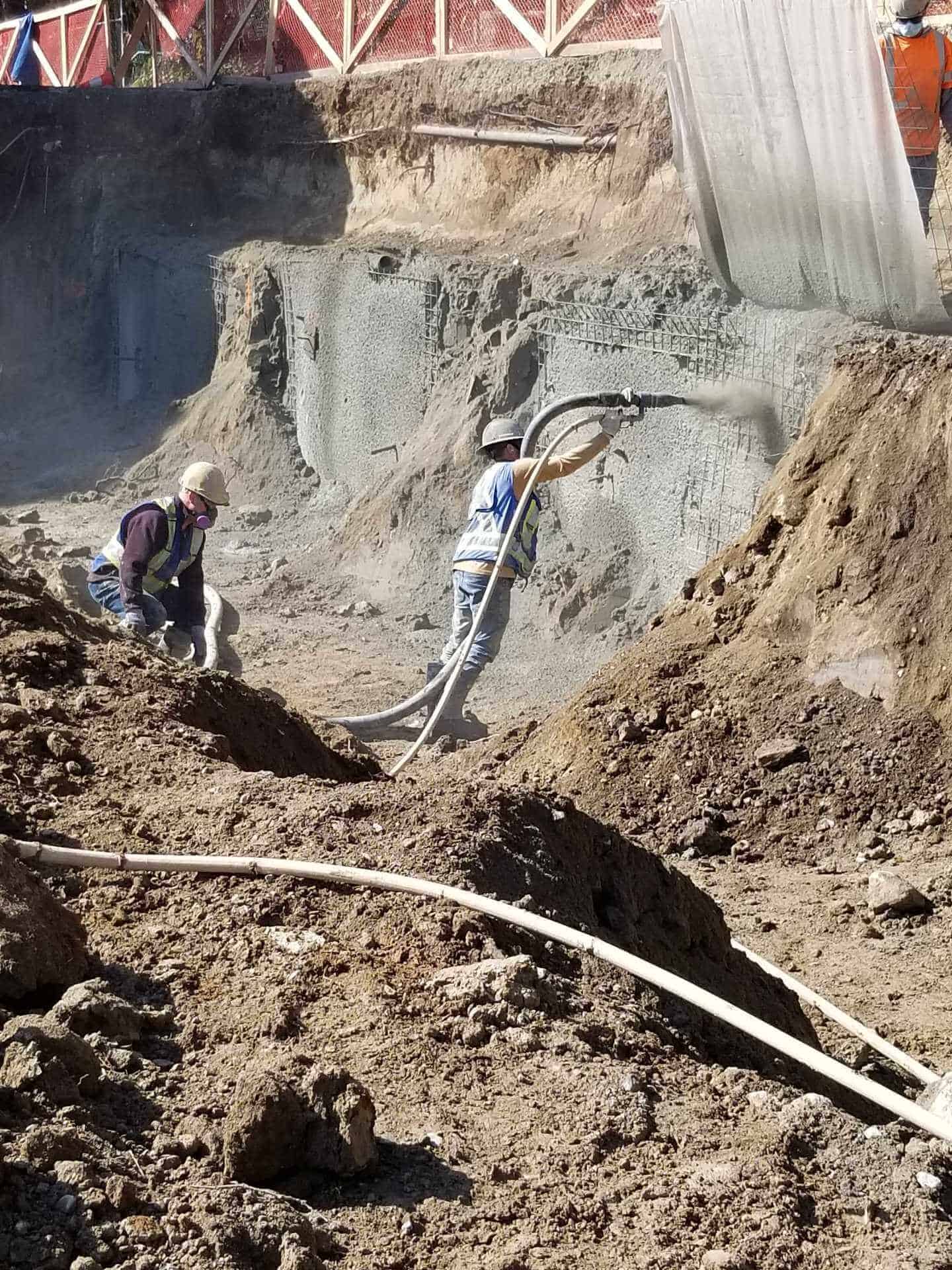
The grout is then injected under controlled pressure to fill voids, seal cracks, or compact weak soils. Throughout this phase, our team closely monitors pressure and flow, adjusting them as needed in real time to avoid over-pressurization and ensure effective penetration. This allows us precise control every step of the way.

Curing

After injection, the grout sets and cures, forming a stable, solid mass. Depending on the material used, a curing period may be required to achieve full performance. Once the material has cured, we verify treatment success through post-grouting assessments and, if needed, additional injections.

Why Choose VSS Shoring?

As one of BC’s most experienced pressure grouting contractors, we bring decades of technical expertise and an intimate understanding of local soil conditions. This extensive expertise in complex foundational work allows us to accurately determine soil conditions and project needs. We also understand that no two projects are alike – even if they are right next to each other. That is why we tailor our solutions to your project after careful assessment. That way, you know you are getting it done right, the first time around.

Reach Out to VSS Shoring For Pressure Grouting Contractors Near You

We work on construction and infrastructure projects throughout Metro Vancouver and the rest of British Columbia. Tell us about your project. Whether you need void filling, epoxy pressure grouting, or pressure grouting concrete repair, or need help determining the right approach, our experts are here to help. Call us or fill out the contact form to speak with our pressure grouting experts today!

Frequently Asked Questions

What is the purpose of pressure grouting?

Pressure grouting is used to stabilize foundations, seal leaks, and strengthen ground conditions, all without the need for excavation or demolition. It can be used in both new and existing structures to prevent settlement in unstable soils.

When is pressure grouting needed?

Structures that may become unstable due to loose subgrade, voids beneath them, or water intrusion can benefit from pressure grouting to stabilize them.

How long does pressure grouting take?

Smaller jobs may take one to two days. Larger or more complex grouting operations—such as deep injections or multi-zone treatments—can take several weeks, depending on site access and depth.

What materials are used in pressure grouting?

We use cement-based grouts, chemical formulations, polyurethane, and epoxy resins. Each material is selected for the site conditions, structural requirements, and environmental constraints.

Is pressure grouting a permanent solution?

Yes. When carried out by experts, pressure grouting is a long-term solution for stabilization, waterproofing, or structural repair. It strengthens soils and structures without requiring ongoing maintenance.

Not Just
Shoring

VSS Shoring Logo
VSS Drilling Logo
VSS Shoring Logo